
The questions to ask an architect before building a villa matter more than any rendering. They decide who will be responsible for the design, what the fee really covers and whether the building you receive will match the one you were shown. This guide lists ten questions we advise putting to any studio, including ours, and explains how to read the answers, with a particular eye to clients who are not based in Italy and will manage the project at a distance.
It is written by Federico Cappellina Architects, an architecture practice in Verona working in Veneto, on Lake Garda and in Lombardy. Treat the list of questions to ask an architect as a checklist to bring to every meeting. Legal references are quoted and linked so you can read them yourself; what is our opinion is stated as such.

The ten questions to ask an architect below follow the order in which a project unfolds. The first three questions to ask an architect concern the person and the studio; the next four concern the appointment and the money; the last three concern building and what comes after.
1. Is the architect registered with the professional association?
To practise as an architect in Italy one must be registered with the provincial Ordine degli Architetti. The reform of the professions (D.P.R. 137/2012) provides for a single national register kept by the national council; the easiest check is to ask for the registration number and confirm it with the provincial Ordine, which can also issue a certificate. If you do not read Italian, ask the practice to send the registration details in writing: it is a normal request.
Be careful with anyone offering to «only produce the drawings» that another professional will sign. A signature carries responsibility, and a person who has not followed the design cannot really assume it.
2. Has the studio built houses like mine?
An architect who excels at renovations may never have followed a 400-square-metre villa, and the reverse. Ask to see built work, not just renderings, and where possible to visit. Ask what role the studio had in each: concept, full design, site supervision or interiors only.
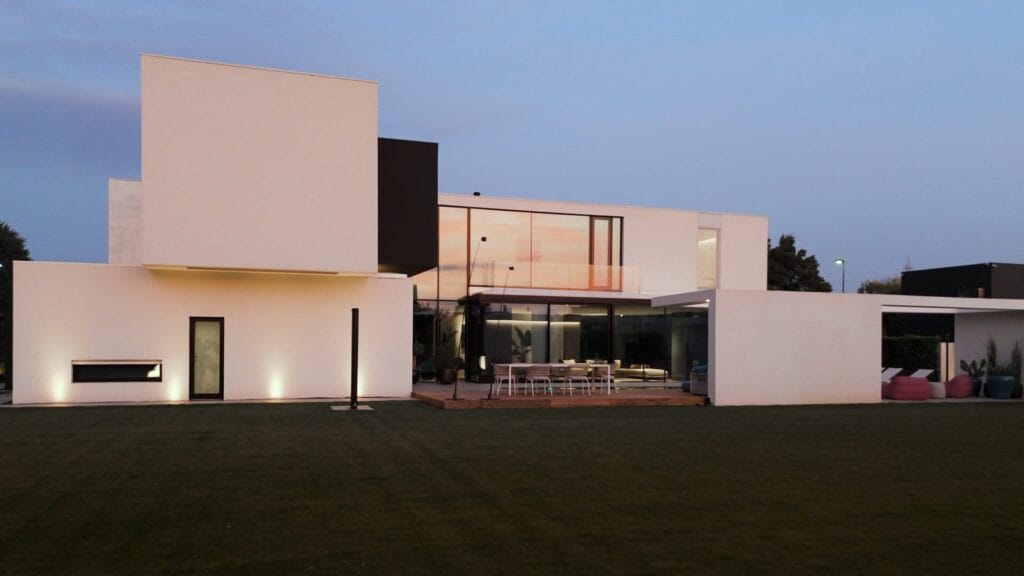
Our own projects are published with photographs and descriptions; from AV Home in Dueville to MD Home in Verona and Lugana Bay on Lake Garda, each shows a different situation. A useful portfolio does not demonstrate a single style imposed on everyone, but the ability to read each plot. See also our guide to courtyard house design for one way of reading a site.
3. Who will actually design and follow my project?
In a small studio the principal often follows each phase personally; in a large one the principal appears at the beginning and the end while collaborators do the work. Neither structure is wrong, but the client has a right to know with whom they will speak each week and who decides the details. Ask for the names of the project lead, the site lead and the services engineers.
4. What does the appointment include?
«Design» can mean very different things. The appointment should be described by phases: preliminary study and concept; developed design; planning and landscape applications; construction drawings with the details; specification and bill of quantities; site supervision; completion and certificate of habitability. A low fee may mean that some phases are excluded and will fall on the client at the most delicate moments. Ask for a written list of what is included and what is not.
5. How is the fee calculated, and when is it paid?
The Italian rules require transparency. Article 9, paragraph 4, of Decree-Law 1/2012 (in Italian) provides that the fee is agreed when the appointment is made; the professional must tell the client in writing or digitally the level of complexity of the commission and the foreseeable costs from appointment to completion, and must supply an estimate listing the individual services and all cost items, including expenses, charges and contributions. A quotation without those items does not meet what the law provides.
How fees for a villa are set, and the main methods (percentage, lump sum, time-based), are explained in our guide to architect fees for a villa in Italy.
6. Does the architect hold professional indemnity insurance?
It is an obligation, not a courtesy. Article 5 of D.P.R. 137/2012 (in Italian) requires the professional to hold insurance for damage caused to the client in the exercise of the profession, and to communicate at the start of the appointment the policy details, its ceiling and any later change; a breach is a disciplinary offence. Ask for a copy of the policy or at least the insurer’s name and the ceiling: for a villa the potential damage is high and the figure matters.
7. How is the budget controlled?
The cost of a house is not discovered after the site opens. Ask how the studio reaches an estimate, how it updates it at each phase and how it compares contractors’ offers. A serious method includes a parametric estimate at concept stage, a measured bill of quantities with the construction drawings, a specification of materials and a comparison of uniform offers. Be wary of anyone who guarantees a final price before the house has been drawn.
8. How does the architect deal with permits and constraints?
A good architect checks the plot before you buy it: zoning, distances, heights, constraints. Around Lake Garda, in the hills and along rivers, landscape protection requires a separate prior authorisation. Our guide to buying land in Italy to build a house lists the checks to make before signing a preliminary contract. Ask which checks the studio will carry out and when.
9. Will the architect supervise the construction?
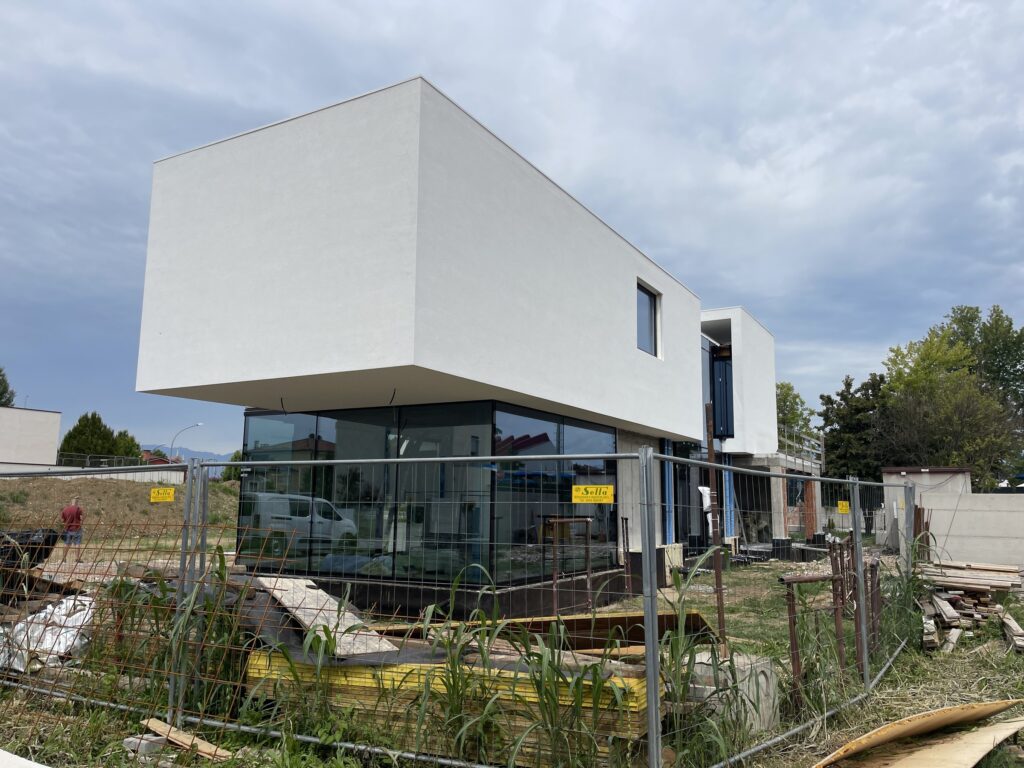
This question separates studios more than any other. A beautiful design built without supervision loses the details that made it beautiful. Ask whether site supervision is included, how often the architect visits, how visits are recorded and who manages variations. In Italy the site manager (direttore dei lavori) also has legal duties during and at the end of construction, including the attestation required for the certificate of habitability.
10. What happens after handover?
A house has a long life. Ask how the studio handles the habitability certificate, final documentation, user manuals and assistance if defects appear. For serious construction defects, Article 1669 of the Civil Code (in Italian) makes the contractor liable for collapse or serious defects that appear within ten years of completion, with notice to be given within one year of discovery; an architect who documented the construction makes it possible to reconstruct what was done.
Questions to ask an architect: how to read a portfolio
The images in a portfolio are chosen to persuade, so they need to be read with method. A few points to check, one at a time:
- Photographs or renderings: photographs of finished work say far more than a simulation. If a project appears only as renderings, ask whether it was built and how it turned out.
- Details: where a wall meets the floor, the junction of a window frame, the eaves. A good project is recognisable by how it resolves the junctions nobody notices at first sight.
- Interior and exterior together: if the portfolio shows only façades, or only living rooms, ask who designed the rest.
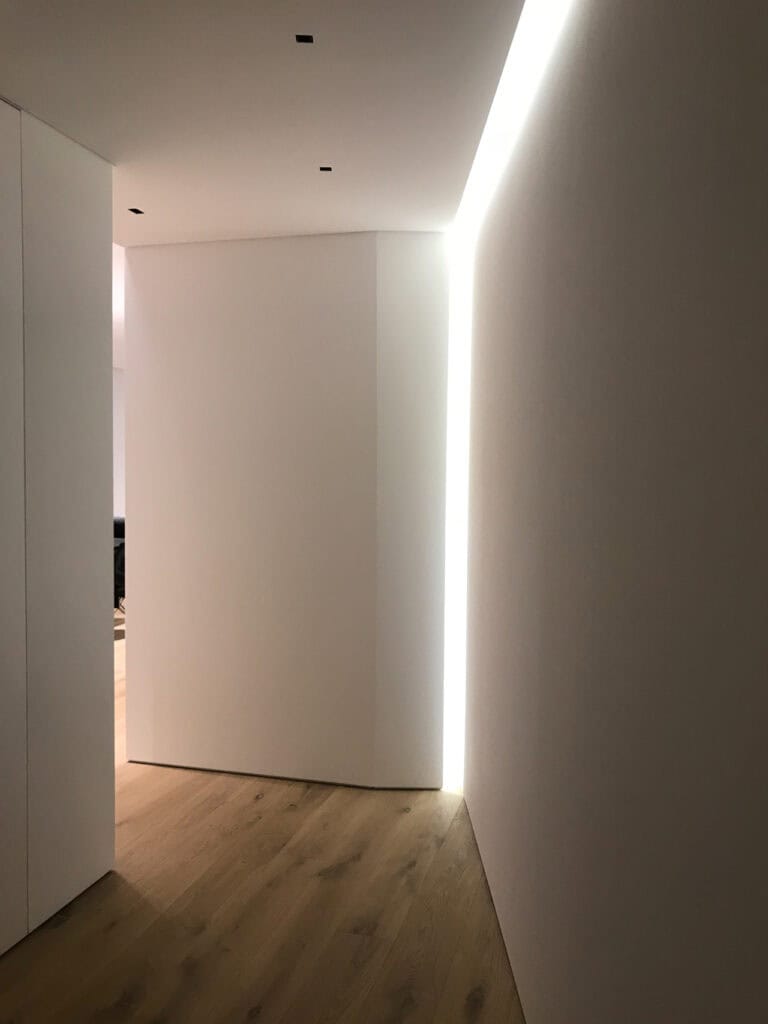
- Light: natural light is the hardest material to design and the easiest to recognise in photographs, from the gradation of shadow on the walls.
- Ageing: if you can, visit a house completed a few years ago and ask the owner what has needed maintenance.
- Real variety: projects that differ by plot and client indicate the ability to listen; identical projects indicate one style applied to everyone.
Questions to ask an architect: how to read the estimate
A well-made estimate is a document to read with a pen in hand. Check that it states: the list of services by phase; what is excluded (for example surveys, specialist reports, landscape applications, site supervision, safety coordination); the method used to calculate the fee; a payment schedule tied to the phases; expenses, charges and contributions shown separately, as Decree-Law 1/2012 requires; and what happens if the design changes or the works last longer than planned. If one offer is much lower than the others, ask which items are missing: it is the quickest way to see whether the estimates can be compared.
Remember too that specialists work alongside the architect: structural engineer, energy consultant, geologist, services engineer, safety coordinator. Ask whether their fees are included in the offer or paid separately by the client, because in a villa they add noticeably to the total.
Questions to ask an architect: warning signs
Some answers to these questions to ask an architect should make you pause.
- A final price promised before seeing the plot or the programme.
- No written estimate listing cost items, contrary to what Article 9 of Decree-Law 1/2012 provides.
- No professional insurance that can be shown.
- A portfolio made only of renderings, with no photographs of completed work.
- No questions about how you live: a design that starts from the designer’s taste instead of the life of the people who will inhabit the house.
- Reluctance to let you visit built houses or sites.
Working with an Italian studio from abroad
Many clients of the practice live elsewhere and manage the project at a distance. A few points are worth settling at the outset. Agree the language of contracts, drawings and site reports; ask how often you will receive written progress reports with photographs; ask who can sign on your behalf if you cannot be at an appointment; and confirm who handles the exchange with the municipality and with the landscape authority if the plot is protected. For purchases of land, the guide linked above also covers the question of reciprocity for non-EU buyers.
How long to spend on the choice
Choosing an architect is not a decision to take in a week. A reasonable path is: collect two or three names, from portfolios and references; a first meeting with each; a visit to a house or a site; a request for a written estimate based on the same starting information; a comparison made with a cool head; a second meeting with the preferred studio to clear up remaining doubts. Each step costs little and reduces the risk of an impulsive choice for an appointment that will accompany the client for years.
What the appointment contract should contain
Once you have chosen a studio, the agreement should be put in writing, in a contract or a letter of appointment. A well-made text makes clear:
- Subject: what is being designed, where and for what use.
- Services: the list by phase, with what is excluded and any specialist services.
- Fee: the calculation method, the amount, expenses and charges shown separately, payment dates tied to phases.
- Timing: an indicative schedule for each phase and what the client must supply to keep to it.
- Variations: how requests for change after approval of a phase are handled and paid.
- Site supervision: if included, with which visits and responsibilities.
- Professional insurance: the details and ceiling, communicated at the start of the appointment as Article 5 of D.P.R. 137/2012 requires.
- Termination: how each party can end the relationship and what is owed in that case.
These are the questions to ask an architect before signing; read the text with a trusted person or a lawyer, even if the studio offers it in standard form.
The mistakes clients make most often
A few mistakes recur when clients choose an architect: deciding on price alone, without comparing the services; deciding on image, without seeing sites or finished houses; relying on word of mouth without checking that the works quoted are similar to one’s own; postponing design decisions until the works begin; not fixing the budget and the margins of variation in writing. They are avoidable with the questions in this guide. It helps to write them down before the first meeting, so that you can recognise the problems when they appear and put the right questions to the studio without hurry.
Questions to ask an architect when comparing two or three studios
When comparing, put the same questions to ask an architect to each studio and ask each for the same material: list of services, indicative timetable, estimate with cost items, examples of comparable work. Compare not only the price but completeness: the studio that charges less but leaves out site supervision may turn out to cost more. Where you can, meet the people who will follow the project and visit a site in progress, to see how the studio works when nobody is watching.
What to bring when you put these questions to an architect
- The address of the plot or the title deed, if available, with any zoning certificate.
- A list of what you really need: number of bedrooms, study, guest space, garden, pool.
- An indicative budget, even as a range, and the timing you have in mind.
- Images you like and, just as useful, images you do not.
- Your habits: how the day is spent, how many people, what bothers you in your current house.
How our practice works
Federico Cappellina Architects designs contemporary residences in Verona, Vicenza, on Lake Garda and in Lombardy. The work starts from the place and from the people who will live there; the practice follows its own projects on site. For each appointment we define in writing the services, the phases and an estimate with its individual items, as the law requires.
Questions to ask an architect: FAQ
How do I check that an architect is registered?
Ask for the registration number and confirm it with the provincial Ordine degli Architetti, which can also issue a certificate.
How much does an architect cost for a villa?
It depends on size, complexity and the services included. The estimate must list the individual services and all cost items in writing, as Article 9 of Decree-Law 1/2012 provides. Our fees guide gives the detail.
Is a small studio better than a large one?
It depends on who actually follows the work. What matters is knowing who designs, who runs the site and with what continuity, more than the size of the practice.
Must an Italian architect hold insurance?
Yes: Article 5 of D.P.R. 137/2012 requires a policy and the communication of its details and ceiling to the client at the start of the appointment.
Should the same studio design and supervise the works?
In most villas yes, because whoever drew the details knows whether they have been executed correctly; the client can still choose another professional.
How many proposals should I ask for?
Two or three studios are enough, provided they receive the same starting documents and return quotations that can be compared.
What should I expect at the first meeting?
Questions about how you live, the plot, the budget and the timing, rather than ready-made images or ideas: they are also the questions to ask an architect, turned around.
Further reading
Beyond the questions to ask an architect, related guides: architect fees for a villa in Italy, buying land in Italy, demolish and rebuild a house in Italy and courtyard house design. To discuss a project, write to the practice from the contact page.
Sources: D.P.R. 137/2012, Art. 5; Decree-Law 1/2012, Art. 9, paragraph 4 (Normattiva); Civil Code, Art. 1669 (Brocardi); consulted on 7 November 2026. Informational content, not legal advice.