Buying land in Italy to build a house is a planning decision before it is a property decision. The plot fixes what can be built long before a design exists, and a site chosen for its price or its view may carry height limits, setbacks or protections that change the house entirely. Federico Cappellina Architects, based in Verona, advises foreign clients to have a plot read by an architect before signing any preliminary contract.
This page sets out what to check and in what order. It does not replace an Italian notary or tax adviser: its purpose is to help you ask the right questions before committing.
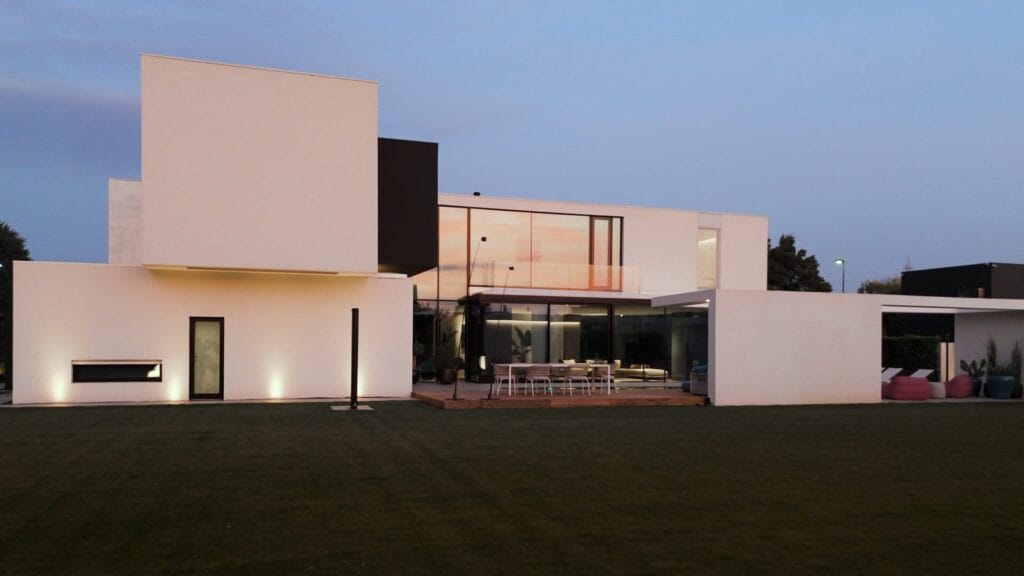
First the plot is read, then the house is drawn.
Can a foreigner buy land in Italy?
Generally yes, but under a condition of reciprocity: as NotaiOnline explains (in Italian), a foreign citizen may buy in Italy if an Italian citizen could do the same in that person’s country, and the notary verifies this before the deed. Confirm your own case with the notary at the outset.
What “building land” means
A listing that says terreno edificabile is a starting point, not a guarantee. The reference document is the certificato di destinazione urbanistica, issued by the municipality. Under article 30 of Presidential Decree 380/2001 (in Italian) it must be attached to deeds transferring land; the municipality has thirty days to issue it, and it stays valid for one year unless the planning instruments change. It must be read together with the municipal plan and its technical rules, which set:
Building index
how much floor area or volume the plot allows.
Heights, distances and roofs
these often shape a house more than the index does.
Implementation plans
some areas require a preliminary plan, with its own time and cost.
Permitted uses
relevant if the house is to include a studio or guest accommodation.
Landscape protection: lakes, coast and rivers
Italy’s Cultural Heritage and Landscape Code protects by law, among other areas, land within 300 metres of lake shores and of the coast, and listed watercourses with their banks for 150 metres (article 142, Legislative Decree 42/2004, in Italian). In these areas a project needs landscape authorisation (article 146). On Lake Garda, a plot with a view may therefore bring a longer procedure and tighter limits on form, materials and colour.
The plot, checked
Access and boundaries
road access, easements, a survey compared with the cadastral maps.
Utilities
water, drainage and power, and how far they are from the plot.
Ground and water table
both affect foundations, basements and cost.
Slope and orientation
sun, views and wind drive the plan and its openings.
Neighbouring plots
what may be built next door and how it affects light and privacy.
Taxes on buying land in Italy
Tax depends on the seller. According to NotaiOnline’s guide, updated October 2026 (in Italian), a purchase of building land from a private seller carries 9% registration tax (minimum €1,000) plus fixed mortgage and cadastral taxes of €50 each; a purchase from a company carries 22% VAT plus three fixed taxes of €200. The tax office can challenge a declared value below market value. A notary or tax adviser should confirm the figures for your case.
The order of steps
The studio gathers these checks in a short feasibility document: what can be built, with what limits, in what time and at what order of cost. For the wider picture see the guides on building a villa in Italy, villa costs in Italy and architect fees.
Buying land in Italy: questions
Is the zoning certificate enough?
No. It states the zone, but what can actually be built depends on the plan’s technical rules, any protections, access and ground conditions.
When should I involve an architect?
Before the preliminary contract. An early check costs little compared with buying a plot that cannot hold the intended house.
Is every plot on Lake Garda protected?
Land within 300 metres of the shore is protected by law, and further constraints may apply. It has to be checked plot by plot.
How long is the certificate valid?
One year from issue, provided the planning instruments have not changed in the meantime.
Talk to the studio
Federico Cappellina Architects works across the Veneto and around Lake Garda. To have a plot reviewed, write to the studio from the Contact page.
Sources: Presidential Decree 380/2001, art. 30; Legislative Decree 42/2004, arts. 142 and 146; NotaiOnline. Consulted 31 October 2026. For information only; not legal or tax advice.