
A construction specification is the document that says how a building work must be carried out: the materials, the workmanship, the performance expected, the timetable, the payments and the tests. In Italy it is called the capitolato speciale d’appalto. If the design drawings say what is being built and the bill of quantities says how much it costs, the construction specification says how it is built, and it sets the rules of the relationship between the client and the contractor. It is what allows several contractors to be compared on the same work, and what allows a client to object, once the site is finished, to what does not match.
This guide explains what a construction specification is for a private house or renovation in Italy, what it contains, which rules of the Civil Code complete it and how it is used in practice. It is written by Federico Cappellina Architects, an architecture practice in Verona that prepares the specification and the bill of quantities for its own projects, for clients who often live abroad and follow the work at a distance. For private works the law does not impose a model: the structure is agreed between the parties, and it is described here as the practice’s own method, with the legal references where they exist. It is not legal advice.
Construction specification in Italy: in brief
- The construction specification (capitolato speciale d’appalto) describes how the works are executed and on what conditions the contract is performed.
- It is read together with the detailed design and the bill of quantities: drawings, bill of quantities and construction specification together define the perimeter of the price.
- In public works the construction specification is a tender document provided for by the public contracts code; in private works its content and structure are agreed between the parties.
- The rules on variations, inspection, acceptance and defects come from the Civil Code (Articles 1659, 1661, 1665, 1667 and 1669), and a good construction specification turns them into procedures.
- A well-built construction specification has two parts: an administrative part and a technical part.
- Its practical uses are three: to compare offers, to control the site and to manage disputes.
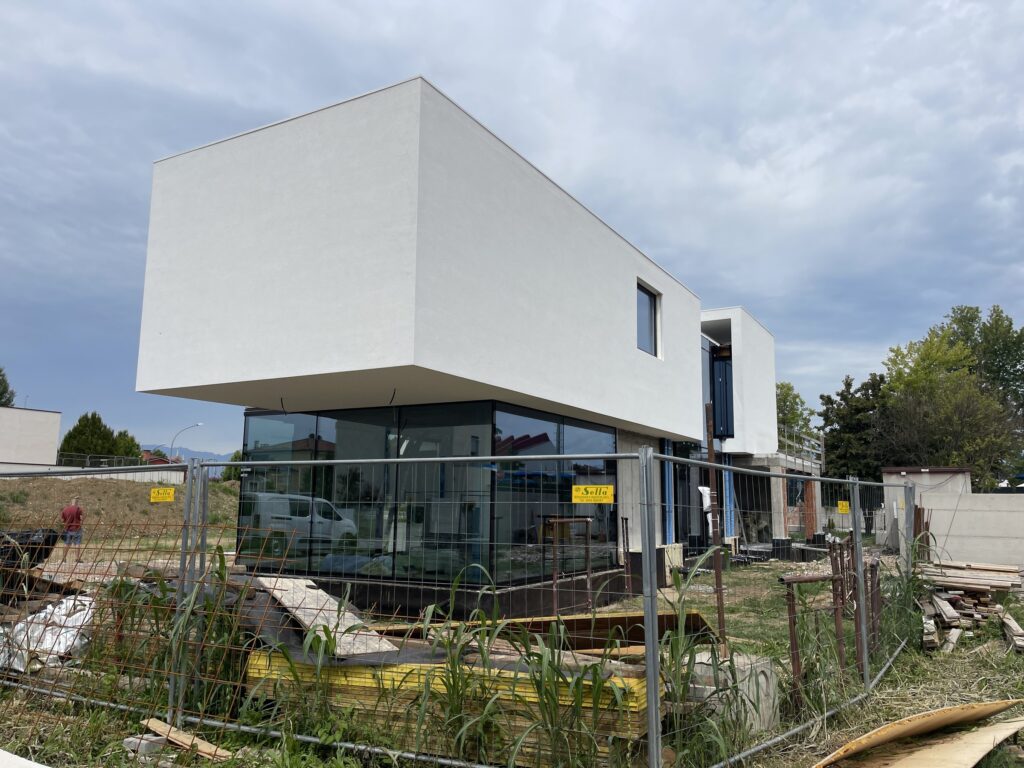
What a construction specification is in Italy
The Italian word capitolato comes from capitoli, chapters, and means a list of conditions. The capitolato speciale d’appalto contains the conditions of one specific works contract (appalto), in addition to the general rules. The word «speciale» matters: the general rules of the Civil Code apply to every building contract, and the construction specification adds what is particular to this house, this site and these parties.
For readers who know the term «specification» from English-language practice, a caution: there it usually refers to the technical description of materials and workmanship. The Italian construction specification covers that technical description, but it also contains the contractual conditions: payments, penalties, variations, acceptance, guarantees. That is why it has two parts, described below.
Construction specification, bill of quantities, quotation and contract: the differences
Four or five documents are often confused. They are different, and the construction specification is only fully useful when it is read with the others.
- Detailed design (progetto esecutivo): the drawings, with the details of what is built.
- Bill of quantities (computo metrico estimativo): the quantities taken from the design, each with a unit price. Our separate guide explains the bill of quantities in Italy.
- Construction specification (capitolato speciale d’appalto): how the works are executed, with which materials and performance, on what conditions.
- Quotation or offer (preventivo): the price at which the contractor commits, drawn up on the items of the bill of quantities and according to the construction specification.
- Works contract (contratto d’appalto): the agreement itself, which calls up the design, the bill of quantities and the construction specification as integral parts.
For a client from another country, the simplest way to remember it: the design is the picture, the bill of quantities is the list with the numbers, the construction specification is the rulebook, and the contract is the signature that makes all three binding. A contract signed without the other three leaves the most important questions to the memory of the parties.
Is a construction specification mandatory?
It depends on whether the works are public or private. For public works, the public contracts code (Legislative Decree 36/2023, Article 87) (in Italian) defines the construction specification as a technical instrument that supplements and specifies the contractual scheme, and lists it among the tender documents. That article concerns public contracts and is cited here as a reference, not as a rule for private works.
For private works, such as a villa or the renovation of a house, we have not found a mandatory model or a legal obligation to have one: the client and the contractor agree it and call it up in the contract. It is a choice that we recommend making. A works contract without a construction specification leaves the points that matter most, such as variations, deadlines and acceptance, to be settled when they have already become disagreements.
The two parts of a construction specification
Practice, including in public documents, divides the construction specification in two. The structure we adopt for private works is the one below; it is the practice’s method, not a legal requirement.
Administrative part
The administrative part governs the contractual relationship: the subject of the contract; a short description of the works; the price and how it is determined (lump sum, a corpo, or by measurement, a misura); delivery and completion dates; penalties for delay; payments and progress certificates; guarantees and insurance; subcontracting; variations; suspensions; testing and acceptance; final documents; and the settlement of disputes.
Technical part
The technical part governs execution: the quality and origin of materials; samples to be approved; methods of work; the performance expected; tolerances; tests and checks; the rules of measurement; the order of the operations; and site protection and cleaning. It is the text to which the site supervision refers in its reports.
The Civil Code rules that the construction specification calls up
A private works contract is governed by the Civil Code, which provides rules that apply even where the construction specification is silent. The ones that weigh most, read in the text of the articles (in Italian, linked at the end of this page), are these.
- Agreed variations (Article 1659): the contractor may not change the agreed way of carrying out the work without the client’s authorisation, which must be proved in writing. If the price of the whole work was fixed as a lump sum, the contractor has no right to payment for variations or additions, even authorised ones, unless otherwise agreed; if the price is by measurement, the variations are calculated like the rest. This is why the construction specification declares, for each part of the work, whether the lump-sum or the measurement criterion applies.
- Variations ordered by the client (Article 1661): the client may change the design unilaterally, but only if the amount of the variations does not exceed one sixth of the total agreed price; the contractor is entitled to be paid for the additional works; and the power does not apply if the variations bring considerable changes to the nature of the work or to the quantities in individual categories.
- Inspection and acceptance (Article 1665): the client has the right to inspect the completed work before delivery. The work is considered accepted if the client, though invited, does not carry out the inspection without good reason or does not communicate the result within a short time, or if the client takes delivery without reservations. Acceptance removes the contractor’s liability for defects that are not hidden and makes the price payable.
- Non-conformities and defects (Article 1667): the contractor is liable for non-conformities and defects in the work, but not if the client accepted the work knowing them or if they were recognisable. The client must report them within sixty days of discovering them, a forfeiture period; the claim lapses two years after delivery.
- Serious defects (Article 1669): for serious construction defects the law provides a longer liability, with periods that should be read in the text of the article (in Italian).
The construction specification cannot ignore these rules: it makes them precise. For example, it states how the client is invited to the inspection, within how many days reservations are communicated, who keeps the register of variations and how new prices are approved. A well-written construction specification turns the terms of the Code into practical procedures.
Eight clauses a construction specification should not omit
- Subject and contract documents: which drawings, bill of quantities and construction specification form part of the contract, and which prevails if they conflict.
- Price and measurement criteria: lump sum or by measurement for each chapter, with the measurement rules called up.
- Time and penalties: start and end dates, programme, suspensions, penalties, extensions.
- Payments: progress certificates linked to the phases, advances, final balance, and possibly a retention as guarantee until the final documents are handed over.
- Variations and additional works: written authorisation, new prices agreed before execution, limits (Articles 1659 and 1661).
- Inspection, acceptance and testing: procedures and deadlines, reservations, delivery (Article 1665).
- Defects and guarantees: notice, remedial works, guarantees on materials and systems (Articles 1667 and 1669).
- Safety and site organisation: roles, documents, responsibilities of each contractor, cleaning and protection.
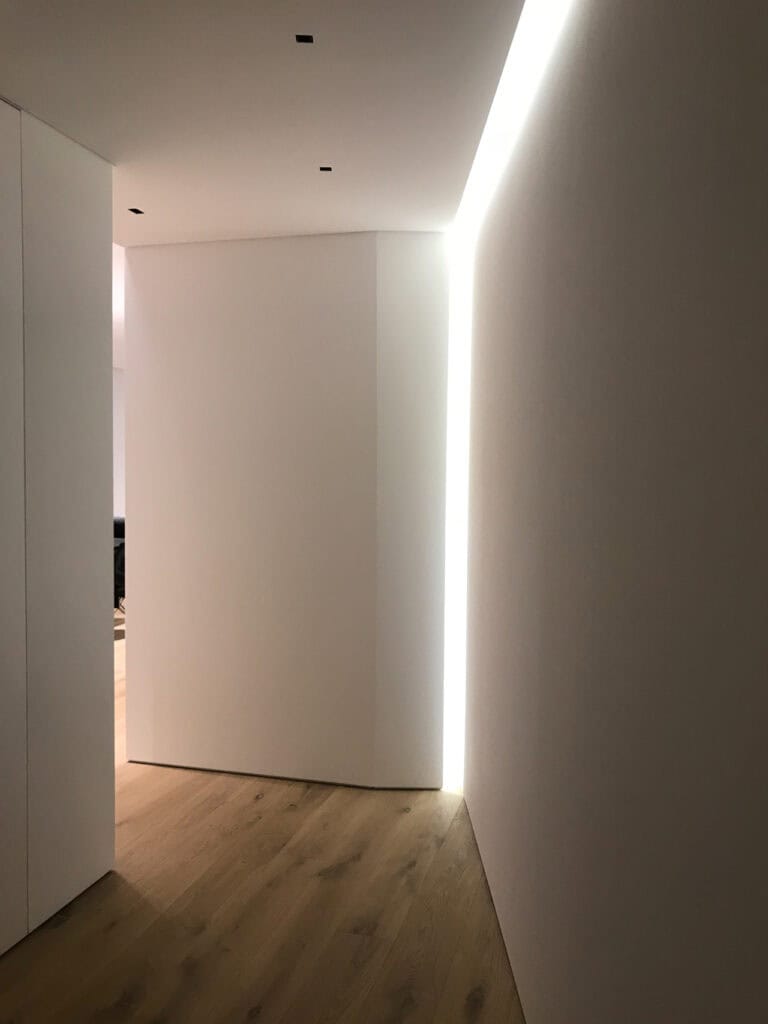
How to write the technical part of a construction specification
The technical part is made of articles, one for each type of work, with a constant structure. Here is the form we use, with an illustrative example and no prices.
- Subject: «Porcelain stoneware flooring in the living rooms».
- Materials: type, format, finish, required resistance class, origin or an equivalent approved by the site supervision.
- Laying: preparation of the substrate, adhesives, joints, movement joints, flatness tolerance.
- Tests and checks: a sample to be approved before supply, a flatness check, verification of falls where they are required.
- Measurement: the measurement criterion (net surface), exclusions, and allowances for cuts, skirtings and thresholds.
The workmanship tolerances stated in a construction specification are not the same thing as the legal construction tolerances, which concern the compliance of the building with its permit: the former are quality criteria for the execution, the latter are limits of conformity between what was built and the title that authorised it.
Using the construction specification to compare contractors
The construction specification is one of the tools for obtaining quotations that can be compared. The method we follow: the contractors receive the same unpriced bill of quantities (the quantities only), the same construction specification and the same drawings; each inserts its own prices, indicates any items it excludes and may propose reasoned alternatives; the offers are compared item by item, and doubts are cleared in writing before the contract is awarded. Without a construction specification the quotations speak different languages, and choosing the lowest becomes a gamble. The comparison of costs is developed in our guide to the cost of renovating a house in Italy.
The construction specification on site: supervision and accounting
On site, the construction specification is the reference of the site supervision (the direzione lavori): the reports call up its articles, the samples are approved according to its rules, and the progress certificates are calculated with its measurement criteria. When a non-conformity appears, the construction specification is read to find out what was agreed and who must put it right, within the terms of the Civil Code.
The same applies to disagreements. A contractor who believes it is entitled to extra payment or more time formulates a reservation, in the forms and within the terms that the contract provides; the site supervision records it and assesses it. A construction specification that defines the procedure, that is who communicates, by when and with what documents, turns a discussion into a file. This mechanism is part of the accounting of the works and is linked to the progress certificates of the bill of quantities. For the end of the process, see our guide to the certificate of habitability in Italy.
Samples, time, safety and guarantees
Samples and approvals
One of the most useful clauses is the obligation to submit samples for approval before supply: floors, wall coverings, windows and doors, ironmongery, finishes. The construction specification states who approves (the client, on the advice of the site supervisor), within what time, in what form (in writing) and what happens if the material supplied differs from the sample. In this way the discussion takes place before the purchase, not after the installation, when correcting costs more.
Programme and penalties
The construction specification fixes the delivery and completion dates and attaches the programme, which gives the order of the operations. A penalty for delay is common in works contracts. It needs careful definition: a disproportionate penalty is hard to apply and one that is too low has no effect. The cases in which time is suspended, for example bad weather or decisions of the client, and their consequences should also be provided for. A construction specification that provides for suspensions and extensions with clear rules avoids the most sterile arguments.
Safety on site
The rules on construction site safety impose their own figures and documents, such as the safety coordinator, who is distinct from the site manager (direttore dei lavori). The construction specification does not replace those documents but calls up the obligations of each contractor and regulates the practical aspects: access, protection, storage, cleaning, coordination between contractors. When several contractors work on the same site, the clarity of these rules decides how smoothly the work flows.
Guarantees and insurance
The construction specification may provide financial or insurance guarantees from the contractor, such as a policy for damage during execution or a retention on payments released when the final documents are handed over. These clauses are negotiable and depend on the amount and complexity of the work. It is better not to copy them from public models without adapting them: for a private house the guarantees should be proportionate, otherwise the cost falls on the price. For serious construction defects, the law provides a specific liability, in Article 1669 of the Civil Code, to be read in the text.
A model table of contents for a house construction specification
The structure we adopt as a starting point, to be adapted to each project, is this.
- Subject of the contract and contract documents.
- Description of the works and order of precedence of the documents.
- Amount and criteria for determining the price (lump sum, by measurement).
- Handover of the site, execution times and programme.
- Penalties, suspensions and extensions.
- Payments and progress certificates.
- Variations, additional works and new prices.
- Subcontracting and contractors operating on site.
- Safety, protection and site cleaning.
- Quality of materials, samples and approvals.
- Methods of execution, chapter by chapter.
- Tests, checks and commissioning.
- Inspection, acceptance and delivery of the work.
- Guarantees, defects and remedial works.
- Final documentation for the certificate of habitability.
Not every chapter is needed for every work: a small intervention uses a few, a villa uses all of them. What matters is that what is not written down is not left to a promise.

Common mistakes in a construction specification
- Copying a public construction specification for a private house: clauses designed for tenders create needless rigidity.
- Generic descriptions: «good quality windows and doors» is not a specification.
- Forgetting which document prevails between the design, the bill of quantities and the construction specification when they conflict.
- Leaving variations unregulated: a lump-sum price without rules is the most frequent source of disputes (Article 1659).
- Not fixing the inspection times: delivery without reservations is equivalent to acceptance (Article 1665).
- Not providing for the final documentation: without declarations and test certificates there is no certificate of habitability.
A construction specification for clients who live abroad
Many clients of the practice follow the works from another country and do not know the Italian vocabulary. A few points are worth settling before the contract is signed. Ask for the construction specification in a language you can read, or at least for a summary of the administrative part in your language, while the Italian text remains the document that binds. Check the first article: which documents form part of the contract and which prevails. Check the variation clause: who may authorise in writing on your behalf if you are not on site, and how fast. Ask how the reports of the site supervision will reach you and in what form. And ask what happens at inspection: the invitation, the date and the time limits for your reservations are the points that Article 1665 makes decisive.
Readers used to other systems should not assume that the documents they know correspond one to one. A generic comparison is only a starting point: in Italy the drawings, the bill of quantities and the construction specification are three separate documents, and each does a different job.
Italian terms at a glance
- Capitolato speciale d’appalto: the construction specification, with the conditions of a specific works contract.
- Appalto: the works contract; the appaltatore is the contractor, the committente the client.
- Computo metrico estimativo: the bill of quantities, with quantities and unit prices.
- Progetto esecutivo: the detailed design from which the works are built.
- A corpo / a misura: lump-sum price / price by measurement.
- Direzione lavori: site supervision; the direttore dei lavori is the site manager.
- Stato di avanzamento: progress certificate, linked to the stage of the works reached.
- Collaudo: testing and acceptance of the completed work.
Construction specification in Italy: frequently asked questions
What is a construction specification in Italy?
The capitolato speciale d’appalto: the document that describes how a work is executed and the conditions of the contract, namely materials, workmanship, time, payments and tests.
Is a construction specification mandatory for private works?
We have not found an obligation, or a model fixed by law, for private works: content and structure are agreed between the parties. For public works it is a tender document (Legislative Decree 36/2023, Article 87).
What is the difference between the construction specification and the bill of quantities?
The bill of quantities lists the works, quantities and prices; the construction specification says how they are executed and on what conditions. They are used together.
Who writes the construction specification?
As a rule the designer, together with the detailed design and the bill of quantities.
What happens if the construction specification conflicts with the design?
The contract must say which document prevails; a good construction specification states it in its first article.
How are variations handled under a construction specification?
With written authorisation (Article 1659) and new prices agreed before execution; the client may impose variations only within one sixth of the price and without changing the nature of the work (Article 1661).
Within what time must defects be reported?
Within sixty days of discovery, with a two-year limitation from delivery for non-conformities and defects (Article 1667); for serious defects the periods of Article 1669 apply.
Further reading
Related guides: the bill of quantities in Italy, the cost of renovating a house in Italy, the house design process in Italy, construction tolerances, the certificate of habitability and the building permit in Italy. For the choice of professional, see the questions to ask an architect and architect fees for a villa in Italy. To set up the construction specification and the bill of quantities of a project, write to the practice from the contact page.
Sources: Civil Code, Articles 1659, 1661, 1665, 1667 and 1669 (Brocardi), consulted on 8 November 2026; Legislative Decree 36/2023, Article 87 (role of the construction specification in public contracts). The structure of the construction specification for private works is the practice’s own method. Informational content, not legal advice.
Related guides: construction drawings, construction schedule, change of use, splitting a property, design changes during construction.