The future of luxury residential architecture is already being built. In the most advanced studios in Italy and across the world, architects are designing homes that redefine what luxury means: not the accumulation of expensive materials and branded systems, but the creation of environments that support a profoundly good life — beautiful, healthy, sustainable, and intelligent.
At Federico Cappellina Architects, this vision has guided our work for over 17 years. This article shares our perspective on the three forces that are reshaping luxury residential design: sustainability, technology, and wellbeing.
The New Definition of Luxury: From Display to Experience
The old definition of luxury — marble floors, grand staircases, name-brand everything — is being replaced by a more sophisticated understanding. Today’s most discerning clients seek experiences, not displays. They want a home that makes them feel genuinely well: rested, calm, connected to nature, comfortable in every season and every hour of the day.
This shift in values is reshaping the design brief. Clients no longer ask primarily for impressive spaces. They ask for spaces that are deeply comfortable, materially authentic, thermally perfect, acoustically serene, and connected to the natural world through light, air, and landscape.
This is not a compromise of luxury — it is luxury elevated to its highest expression.
Sustainability as Architecture: Beyond Green Certification
Sustainability in luxury residential architecture has evolved beyond the checkbox model of green certification. LEED, BREEAM, and Italian NZEB standards are useful frameworks — but they are minimums, not ideals.
The truly sustainable luxury villa is a building that achieves extraordinary environmental performance without compromising — and indeed by enhancing — its architectural quality. This requires design intelligence applied from the earliest stages: orientation, massing, thermal mass, natural ventilation, and passive solar design that reduce energy demand before any active system is considered.
High-performance building envelopes — triple-glazed windows, highly insulated walls and roofs, airtight construction with heat recovery ventilation — are now standard in our projects. They deliver a thermal environment of extraordinary comfort: warm in winter without draughts, cool in summer without air conditioning noise, silent throughout the year.
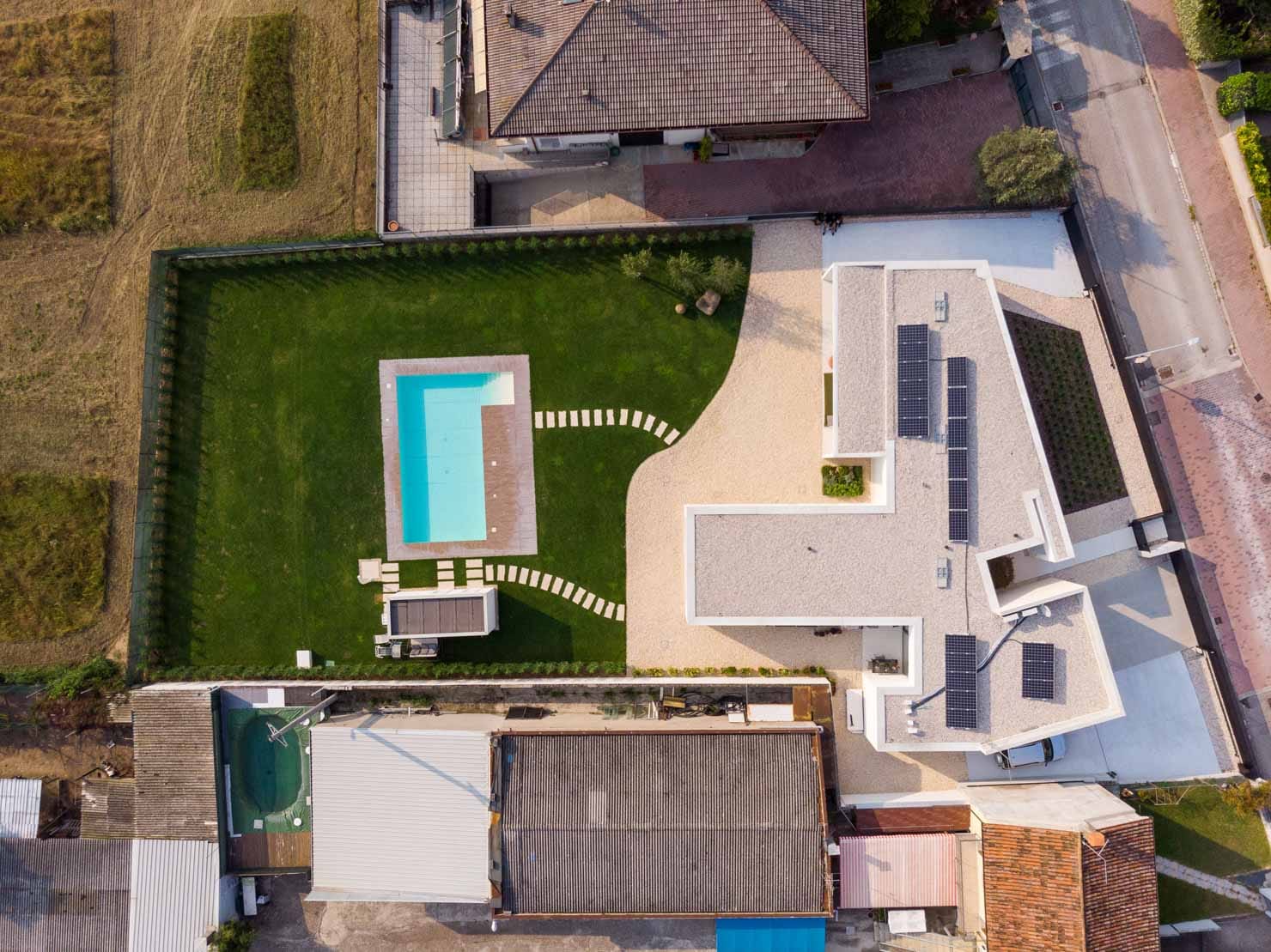
The energy supply for these buildings comes increasingly from renewable sources: photovoltaic panels integrated discreetly into the roof or landscape, geothermal heat pump systems that extract energy from the earth, and battery storage systems that allow full autonomy from the grid on most days.
Biophilic Design: Bringing Nature Inside
One of the most significant shifts in luxury residential design over the past decade is the rise of biophilic design — the intentional integration of natural elements, materials, and processes into the built environment.
Research consistently shows that contact with natural elements — daylight, natural materials, plants, water, views of landscape — reduces stress hormones, improves sleep quality, increases cognitive performance, and enhances overall wellbeing. For clients investing in their most important home, these are not peripheral benefits. They are central to the brief.
In our projects, biophilic design means: large openings that frame views of landscape and sky. Interior gardens or planted walls that bring living nature inside. Natural materials — stone, timber, linen — that connect the interior to the cycles of the natural world. Water features that introduce sound and movement. Circadian lighting systems that follow the natural rhythm of the day.
Technology in Service of Life: Smart Home That Disappears
Technology has transformed what is possible in luxury residential architecture. But the most sophisticated clients no longer want technology to be visible. They want technology to disappear — to work perfectly, invisibly, in service of a more comfortable and more beautiful life.
The smart home of 2026 is not a control panel of buttons and screens. It is a building that learns: that understands the rhythm of the family, anticipates their needs, adjusts light and temperature and music to support each moment of the day. It wakes gently with dawn light. It cools automatically as the afternoon sun moves. It secures itself when the family leaves and welcomes them home before they arrive.
We specify smart home systems that achieve this level of intelligence while remaining architecturally invisible. Controls are voice-operated or accessed through a single, beautifully designed interface. Sensors are concealed. Mechanical plant is located, isolated, and silenced within the architecture.
Wellbeing Architecture: Design for Body and Mind
The private SPA and wellness facilities that we described in our article on SPA design are part of a broader shift in luxury residential architecture toward what we call wellbeing design: the intentional use of architectural space to support physical health, mental clarity, emotional balance, and social connection.
Wellbeing design begins with light — the most fundamental regulator of human biological rhythm. We design spaces that deliver the right quality of light at the right time: energising morning light in bedrooms and bathrooms, diffused productive light in working spaces, warm intimate light in dining and living rooms in the evening.
It continues with acoustics: the luxury home should be genuinely silent — free from traffic noise, neighbour noise, mechanical system noise, and the low-frequency vibration that accumulates invisibly in urban environments. This requires investment in acoustic design from the structural level, but the result — a home that is truly quiet — is among the most profound luxuries available.
The Materials of the Future: Natural, Durable, Beautiful
The material palette of the luxury villa of the future will be simultaneously ancient and contemporary. Natural materials — stone, timber, fired earth, lime — will continue to define the character of the finest homes. These materials are sustainable (locally sourced, low embodied energy, durable, repairable), sensory (warm, varied, alive to the touch), and timeless (they have been beautiful for millennia and will continue to be beautiful).
New materials and technologies will complement rather than replace this natural palette. High-performance glass that maximises light while eliminating heat gain. Ultra-thin stone panels that reduce weight while maintaining the authenticity of natural material. Structural timber systems that allow larger spans and more complex geometries.
The key principle remains constant: every material must be chosen for its genuine merit — its performance, its beauty, its sustainability, its appropriateness to the place and the brief. Never for fashion, never for show.
Our Vision: Architecture for a Life Well Lived
At Federico Cappellina Architects, our vision for the luxury villa of the future is simple: a home of extraordinary quality that supports the best possible life for its inhabitants — and for the generations that will follow.
This means architecture that is beautiful and functional. Sustainable and luxurious. Technologically intelligent and humanly warm. Deeply rooted in the Italian tradition of building well, and open to the best ideas from the world’s most innovative architectural cultures.
If this vision resonates with you, we would be honoured to begin a conversation about your project.
Contact us at info@federicocappellina.com or WhatsApp +39 333 101 6060. We offer a private initial consultation for qualified projects.
Federico Cappellina Architects — Verona, Italy. Luxury villa architecture for the future.