Designing a luxury villa in Italy requires a specific approach. It is a profound process that encompasses architecture, spatial psychology, sustainability, and — above all — the ability to translate a client’s vision into a unique and unrepeatable living experience.
In this article, I share the 10 essential elements that every luxury villa project must include to be truly extraordinary. These principles emerge from over twenty years of experience designing high-end residential villas in Italy and worldwide — from Verona to Dubai, from Zanzibar to Saudi Arabia.
1. The Concept: First and Foremost, a Story to Tell
Every luxury villa I design begins with a fundamental question: what story must this house tell?
This is not merely about choosing an architectural style. It is about understanding who the client is, how they live, what moves them emotionally, what their daily rituals are. A villa for a family with children has a completely different soul from a private residence for an international entrepreneur who spends only a few weeks there each year.
The concept is the compass for the entire project. Without a clear and shared concept, even the most expensive choices risk appearing incoherent. In my working method, the concept phase takes weeks and includes in-depth conversations, visual reference boards (moodboards), and conceptual sketches that capture the essence of the space before technical drawings even exist.
Key principle: Dedicate at least 20% of your design time to defining the concept. It is the foundation upon which everything else is built.
2. The Relationship with the Landscape: The Villa as Part of Its Territory
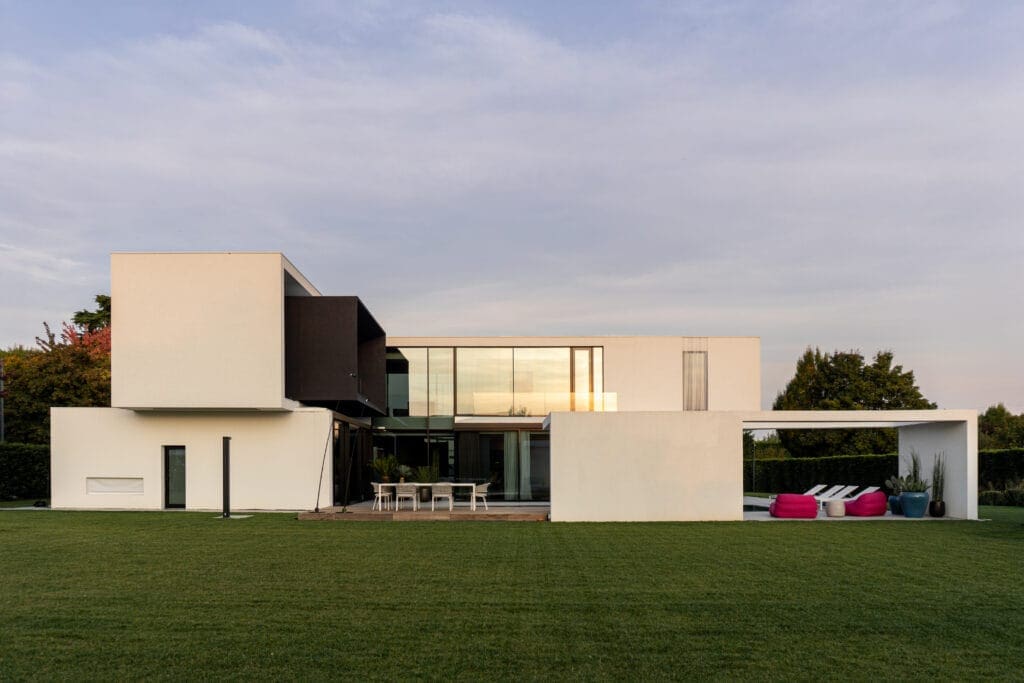
A luxury villa does not exist in a vacuum. It exists within a context — a Venetian hillside, a Mediterranean coastline, an Arabian desert, a tropical forest. The relationship between architecture and landscape is one of the most distinctive elements of an excellent project.
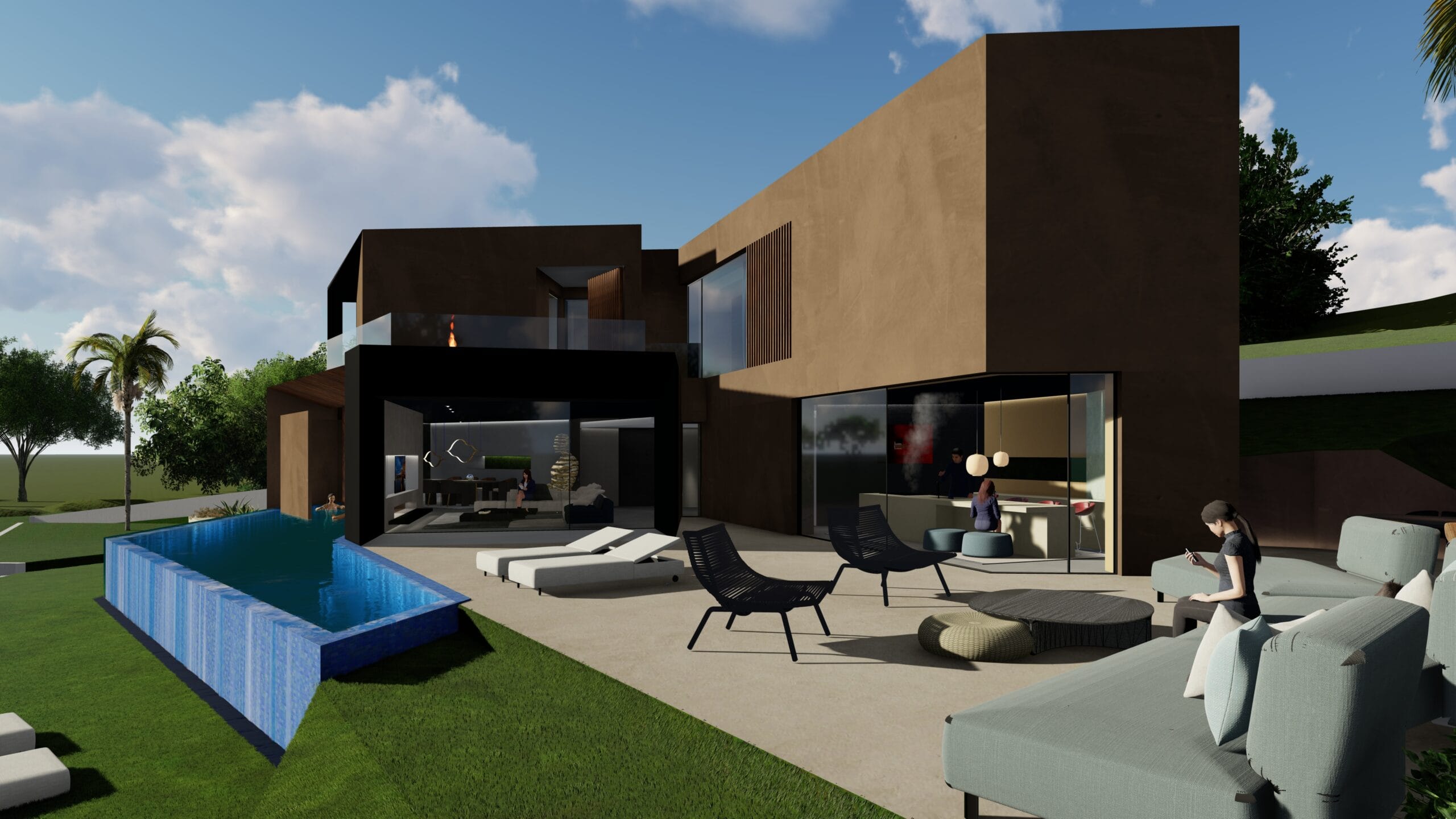
In my approach, the villa does not dominate the landscape: it converses with it. Openings are designed to frame specific views. Materials echo the earth and stone of the place. Volumes adapt to the topography rather than ignoring it.
Key principle: Before beginning to design, study the plot at every hour of the day and every season. Identify views to enhance, prevailing winds, optimal solar orientation.
3. The Floor Plan: Flows, Hierarchies and Connections
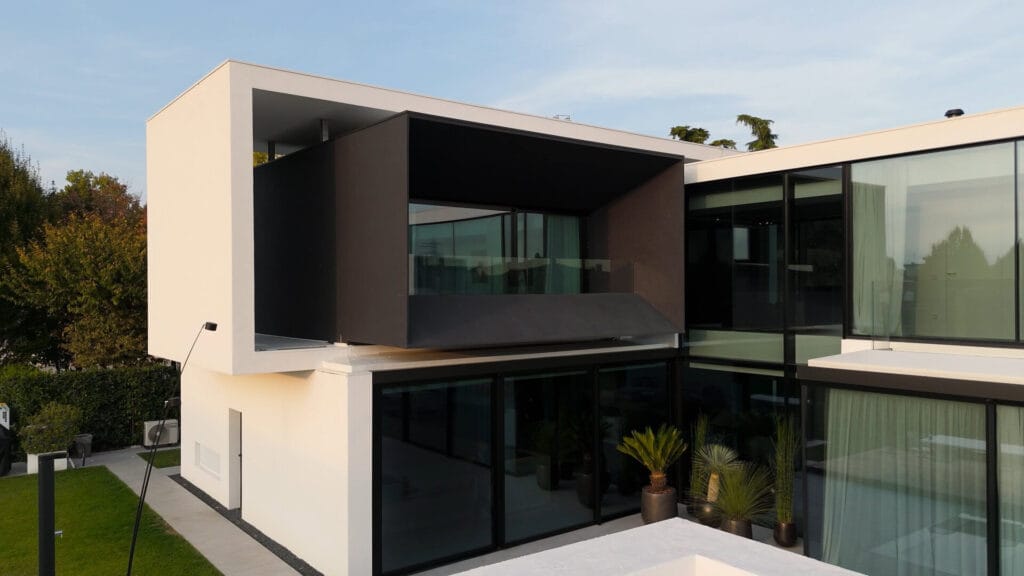
The floor plan of a luxury villa must solve a complex challenge: ensuring privacy, functionality, and fluidity simultaneously.
A good floor plan has clear hierarchies. The reception spaces — living room, dining room, outdoor area — are generally on the ground floor, open towards the garden and pool. The sleeping quarters are separate and protected. The service areas are efficient but invisible.
The floor plans of my villas are almost always conceived around a central perspective axis that runs through the house from the entrance point to the external landscape. This axis creates orientation, hierarchy, and a cinematic sense of space.
Key principle: Draw the circulation routes first, then the walls. Always ask: what does someone standing at this point in the house look at?
4. Natural Light: The Invisible Ingredient
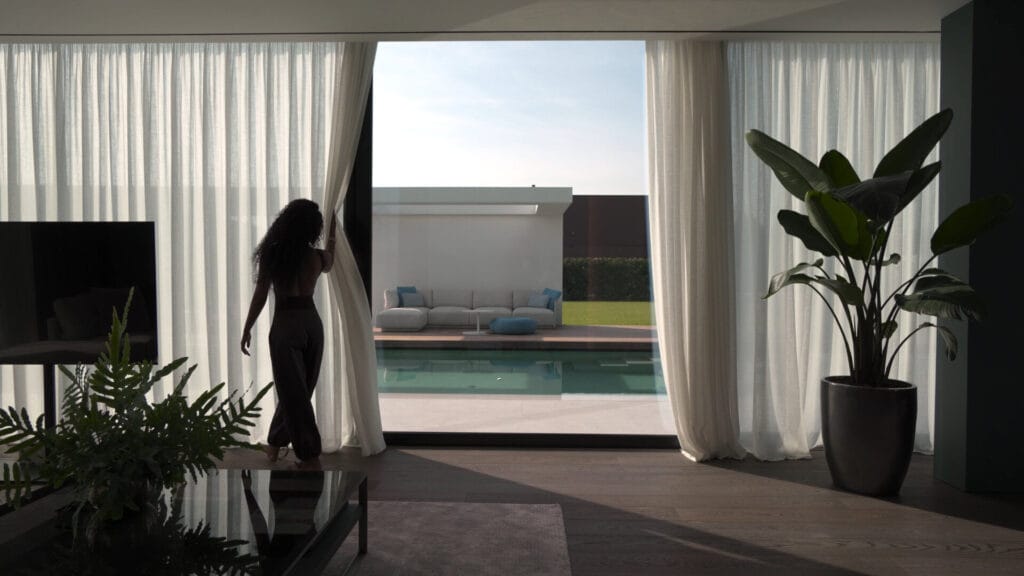
Natural light is the most powerful — and least expensive — ingredient in luxury interior design. Yet it is often treated as an accessory rather than a primary design element.
In my villas, every room is studied to receive light at specific times of day. The master bedroom receives morning light. The living room is illuminated by afternoon sun. The dining area is kissed by the slanted light of sunset.
In warm-climate villas, light is also an element to control and filter: overhanging roofs, brise-soleil, and vertical screens are integral parts of the architectural project, not afterthoughts.
Key principle: Study the solar path on the site during the concept phase. Use simulation software to verify natural lighting in every season.
5. Materials: Authenticity, Durability and Sense of Place
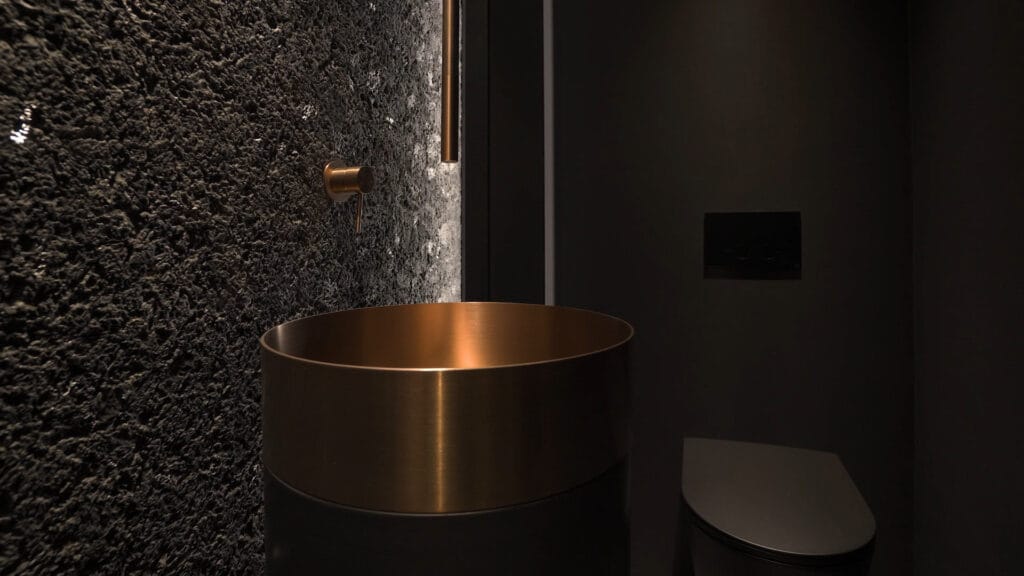
The materials of a luxury villa must be beautiful, but they must also age well. A common mistake is choosing materials that look spectacular on opening day but appear tired or difficult to maintain years later.
My approach favors natural materials — stone, wood, marble, metal — in their most authentic versions. Not synthetic substitutes that imitate them, but real materials, with their imperfections, their grain, their capacity to acquire character over time.
Materials I use most frequently:
- Local natural stone (travertine, basalt, Vicenza stone)
- Solid or glulam timber for structures and cladding
- Corten steel and burnished metal for details and fixtures
- Natural lime-based plasters
- Low-emissivity glass for large transparent surfaces
Key principle: Create a coherent material palette with a maximum of 5-6 materials. Complexity is not luxury: the quality of the few chosen elements is.
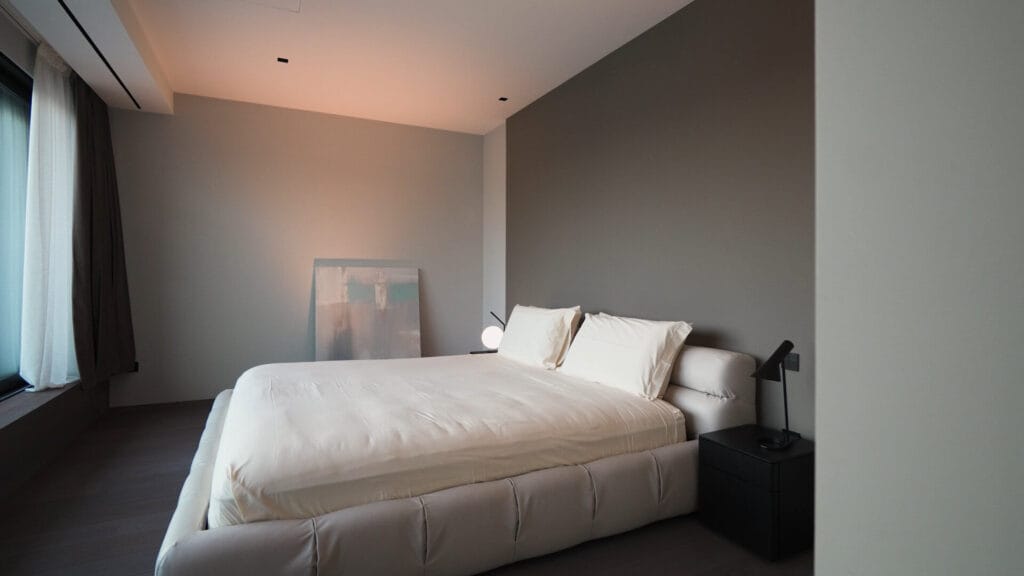
6. The Sleeping Wing: The Private Heart of the Villa
The sleeping quarters of a luxury villa are much more than bedrooms with en-suite bathrooms. They constitute a system of private spaces that must respond to needs for intimacy, comfort, and personalization.
The master suite is the centerpiece. It must have: a privileged view, precisely managed natural light, a spa-level master bathroom, a functional and elegant walk-in closet, and ideally direct access to a private outdoor space — a terrace, a secret garden, a rooftop pool.
Key principle: Design each room with a “story”: a visual theme, a specific view, a dominant material. Luxury villas are remembered for their details, not their square footage.
7. The Pool and Exterior Landscape: The Fifth Elevation
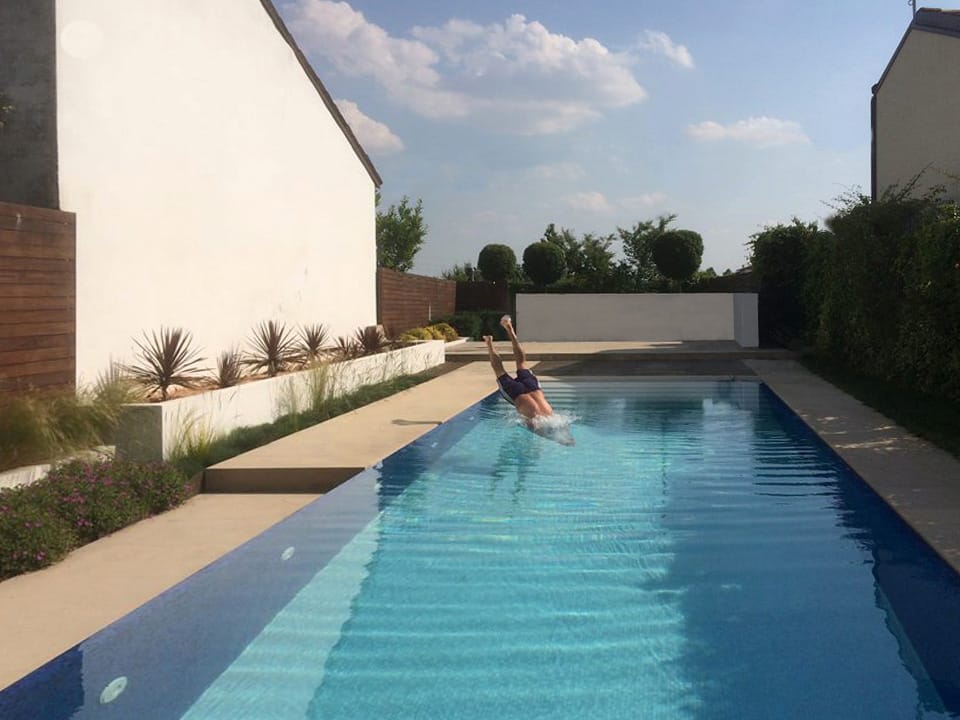
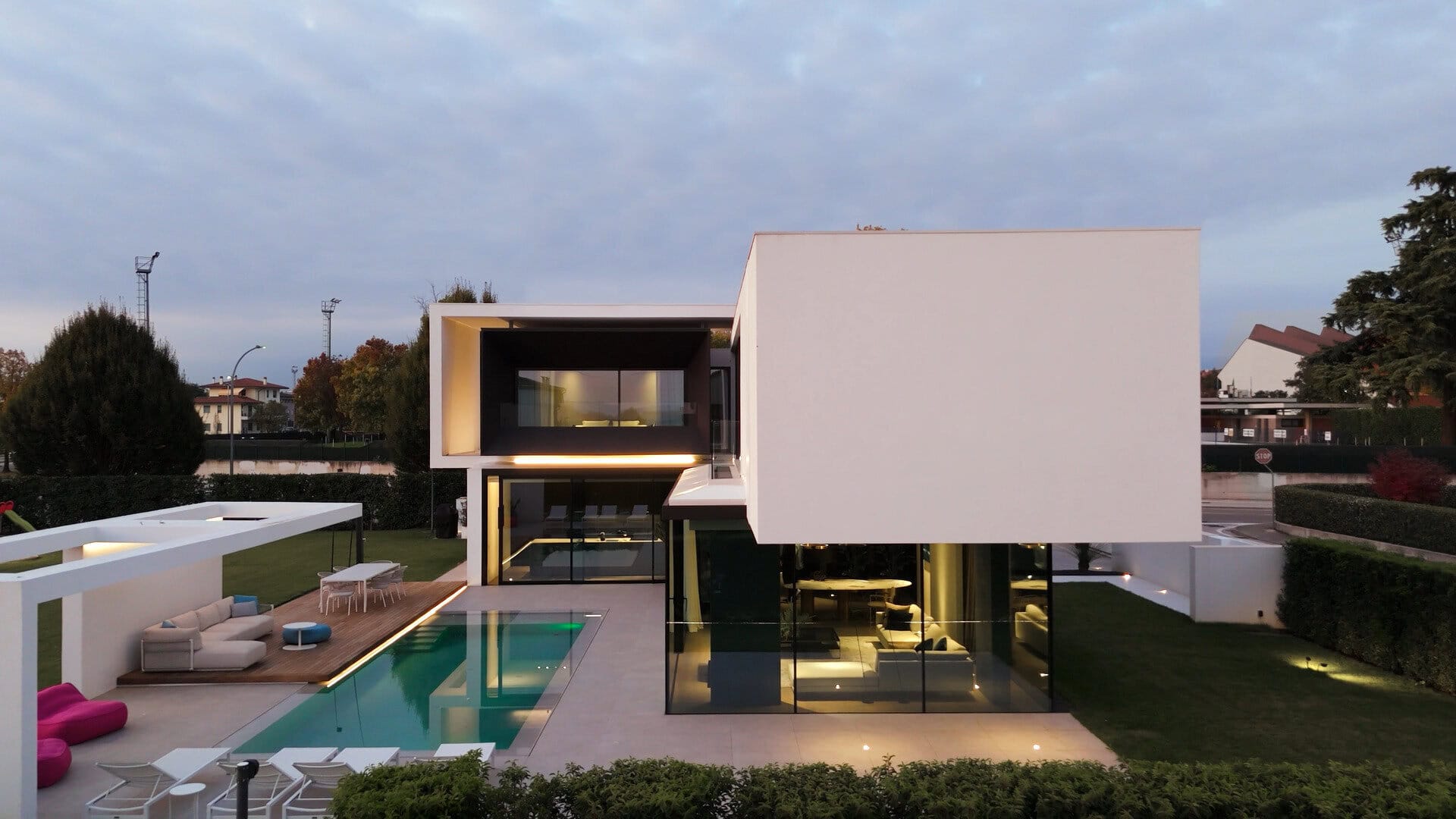
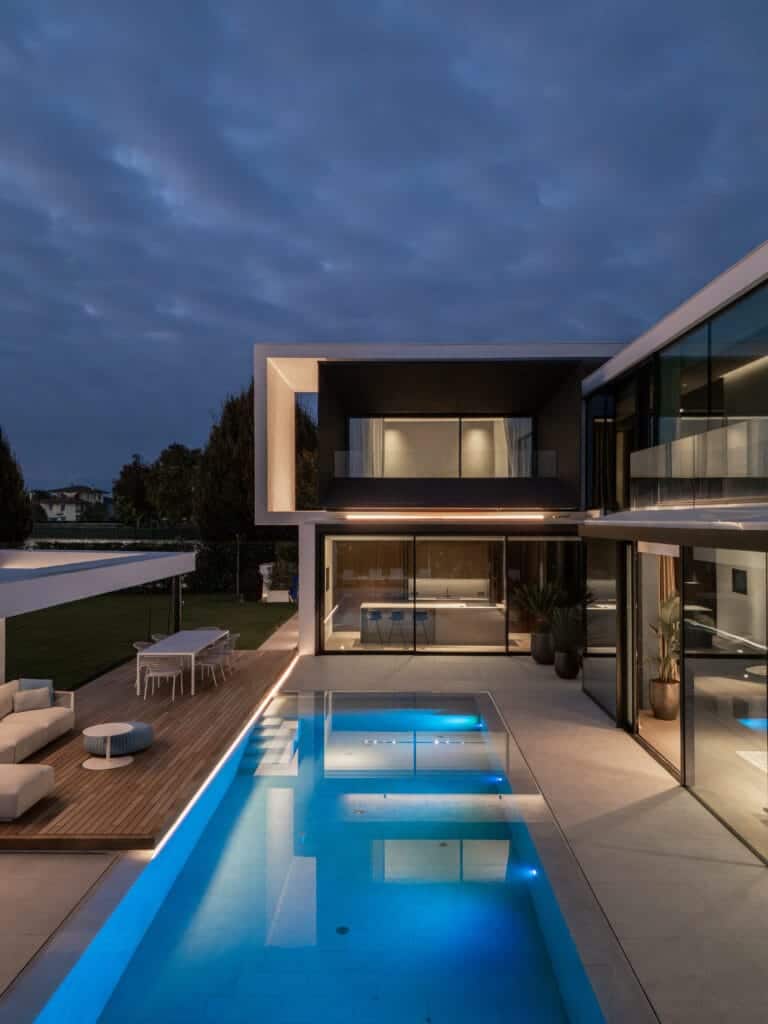
The pool of a luxury villa is never simply a pool. It is an architectural element that converses with the house, integrates into the landscape, and defines the quality of the outdoor spaces.
The finest pools I have designed share one characteristic: they appear natural within their context. Water reflects the sky, the mountains, the vegetation. The infinity edge creates a water plane that merges with the landscape.
Key principle: Design the exteriors in parallel with the interiors, not as an afterthought. The boundary between inside and outside is the most precious zone of a luxury villa.
8. Technology: Invisible but Present
Smart home systems and technology in a luxury villa must be powerful and invisible. The client does not want to see the technology: they want to experience its benefits.
This means: automated lighting that follows circadian rhythms, silent and efficient climate control systems, integrated security without invasive visual elements, distributed audio in every room without visible speakers, motorized windows that adapt to solar conditions.
Key principle: Plan technological infrastructure during the structural design phase, not during finishing. Retrofitting technology is expensive and almost always aesthetically compromised.
9. SPA and Wellness: The Luxury of Wellbeing
Physical wellbeing has become a constitutive element of contemporary luxury. High-end villas increasingly include a complete wellness area: sauna, steam room, indoor pool or hot tub, massage room, gymnasium.
The spas I design are characterized by: warm materials (wood, stone, natural fabrics), soft and adjustable lighting, scents integrated into the ventilation system, absolute silence guaranteed by acoustic design, and a minimalist aesthetic that does not distract from wellness rituals.
Key principle: Dedicate an autonomous space to the wellness area, with direct access from outside but separated from the living and sleeping zones. Wellbeing requires separation.
10. Identity: What Makes Your Villa Unique
The tenth element is the most difficult to explain but the most important: identity. That quality which makes the villa immediately recognizable as yours — as an expression of your personality, your values, your way of inhabiting the world.
Identity cannot be purchased with budget. It is not a matter of square footage or the brand of the fixtures. It is the result of a profound design process, an authentic collaboration between client and architect, courageous and coherent choices.
Key principle: Ask your architect uncomfortable questions. Ask “why” for every choice. Memorable villas are those in which every element has a reason to exist.
Conclusion
Designing a luxury villa is both a privilege and a responsibility. It is the opportunity to create something that will last for decades, that will be lived in by generations, that will permanently express the values and vision of those who inhabit it.
If you are considering designing your villa and wish to explore these ideas concretely, I am available for a private online consultation — an hour of conversation to understand your vision and the possible design approaches.
→ Book a consultation on WhatsApp: +39 333 101 6060 → Or write to: info@federicocappellina.com
Federico Cappellina is an architect based in Verona, Italy, specializing in contemporary luxury villa design in Italy and internationally.