The private SPA has become one of the most requested elements in contemporary luxury villa design. For UHNW clients worldwide, the ability to enjoy a complete wellness ritual within the privacy of their own home is no longer an aspiration — it is an expectation.
At Federico Cappellina Architects, we design private SPA environments in luxury villas across Italy, Dubai, and Africa. This guide explains our approach to wellness architecture: how we create spaces that are technically precise, materially exceptional, and deeply restorative.
Why UHNW Clients Invest in Private SPA Architecture
The motivations behind a private SPA go far beyond convenience. For discerning clients, the SPA is a statement of values: an investment in health, privacy, and the quality of daily life. It is a space designed exclusively for them — calibrated to their rituals, their preferences, their sense of beauty.
A private SPA also represents a significant investment that, when designed correctly, adds substantial value to the property. The key word is “correctly.” A poorly designed SPA — with inadequate ventilation, inappropriate materials, or spatial relationships that feel institutional rather than domestic — is worse than no SPA at all.
The finest private SPAs in the world feel nothing like hotel facilities. They feel like the most intimate and personal rooms in the house: warm, quiet, beautiful, and entirely their own.
Water, Light, and Materiality: The Three Pillars of Wellness Design
Every exceptional SPA environment is built on three fundamental elements: water, light, and materiality.
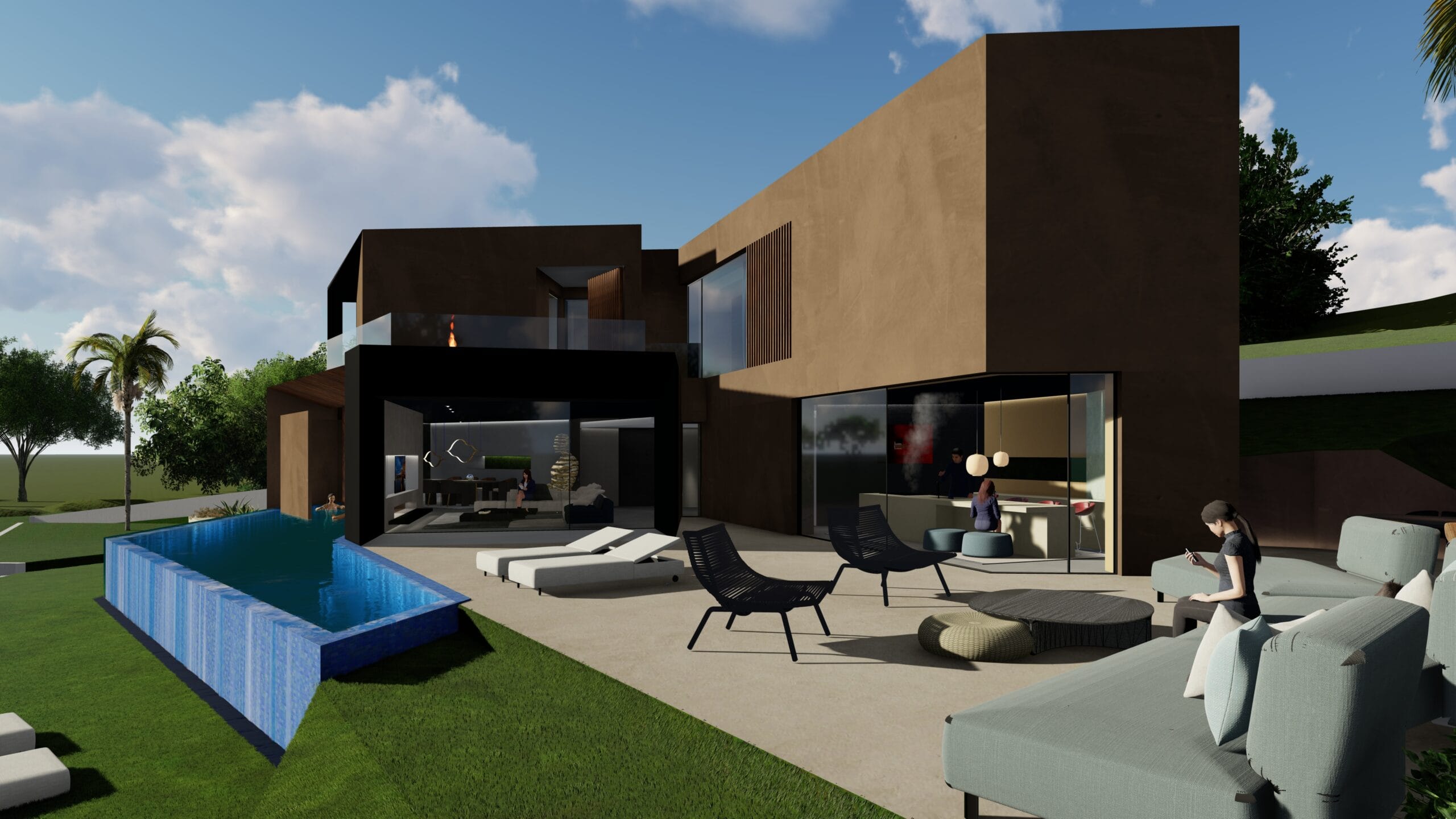
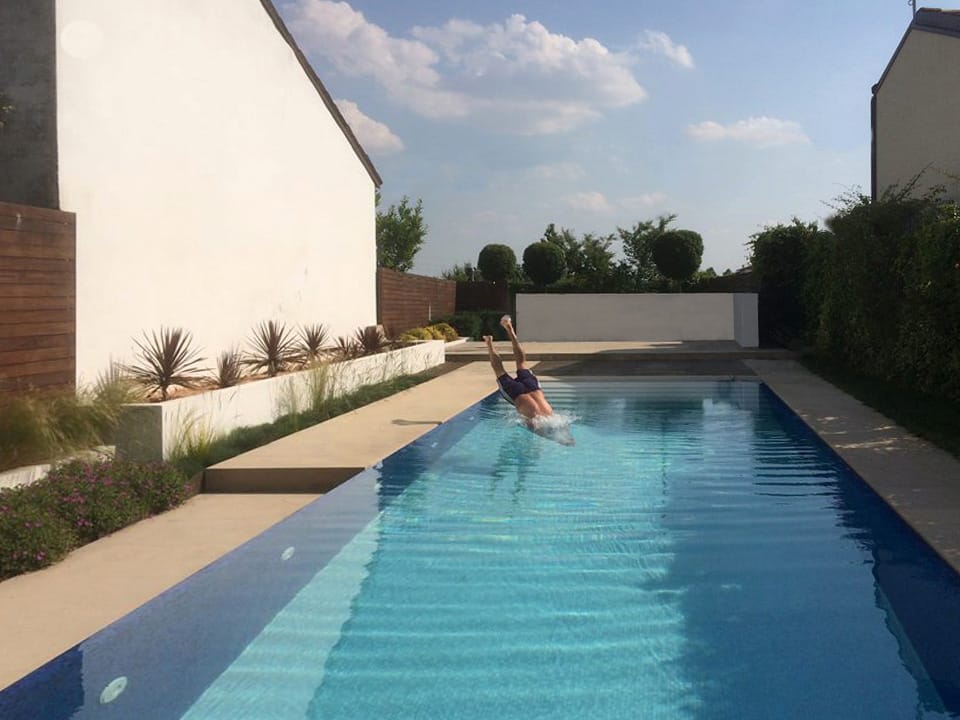
Water is the defining element of wellness architecture. The sound of water — even a thin sheet flowing over stone — transforms the acoustic character of a space. The visual presence of water creates calm. We design water features not as decorative additions but as architectural elements: reflecting pools, rain showers integrated into stone walls, pools that extend the horizon of a private courtyard.
Light in a SPA must be carefully controlled. Natural light is essential — it connects the body to the rhythm of the day and the season. But it must be filtered, softened, and directed. We use clerestory glazing, light wells, and translucent stone panels that glow when backlit. Artificial lighting follows the same logic: layered, warm, and dimmable to support different rituals at different times of day.
Materiality in luxury SPA design must satisfy both the eye and the touch. Natural stone — limestone, marble, travertine — is our primary material. It is beautiful when dry and extraordinary when wet. Timber is used selectively in sauna environments and dry spaces. Every material must perform technically in a humid, thermally demanding environment, and must do so beautifully for decades.
Hammam, Sauna, Pool: Designing the Complete Ritual Journey
A complete private SPA is not a single room — it is a sequence of spaces designed to support a ritual journey of contrast, rest, and renewal.
The hammam is the heart of the Middle Eastern wellness tradition: a warm, humid space of steam and social ritual. In private villa design, we create hammams as sensory chambers — dark stone, precisely calibrated humidity, integrated steam generators concealed within the architecture, and natural light introduced through a central oculus or perforated ceiling.
The sauna is the Nordic counterpart: dry heat, natural timber, the ritual of heat and cold contrast. We design Finnish-style saunas in solid spruce or cedar, with wood-burning stoves for the most authentic experience or electric stoves for ease of use. The sauna looks directly onto the cold plunge pool or outdoor shower — the contrast is immediate and architectural.
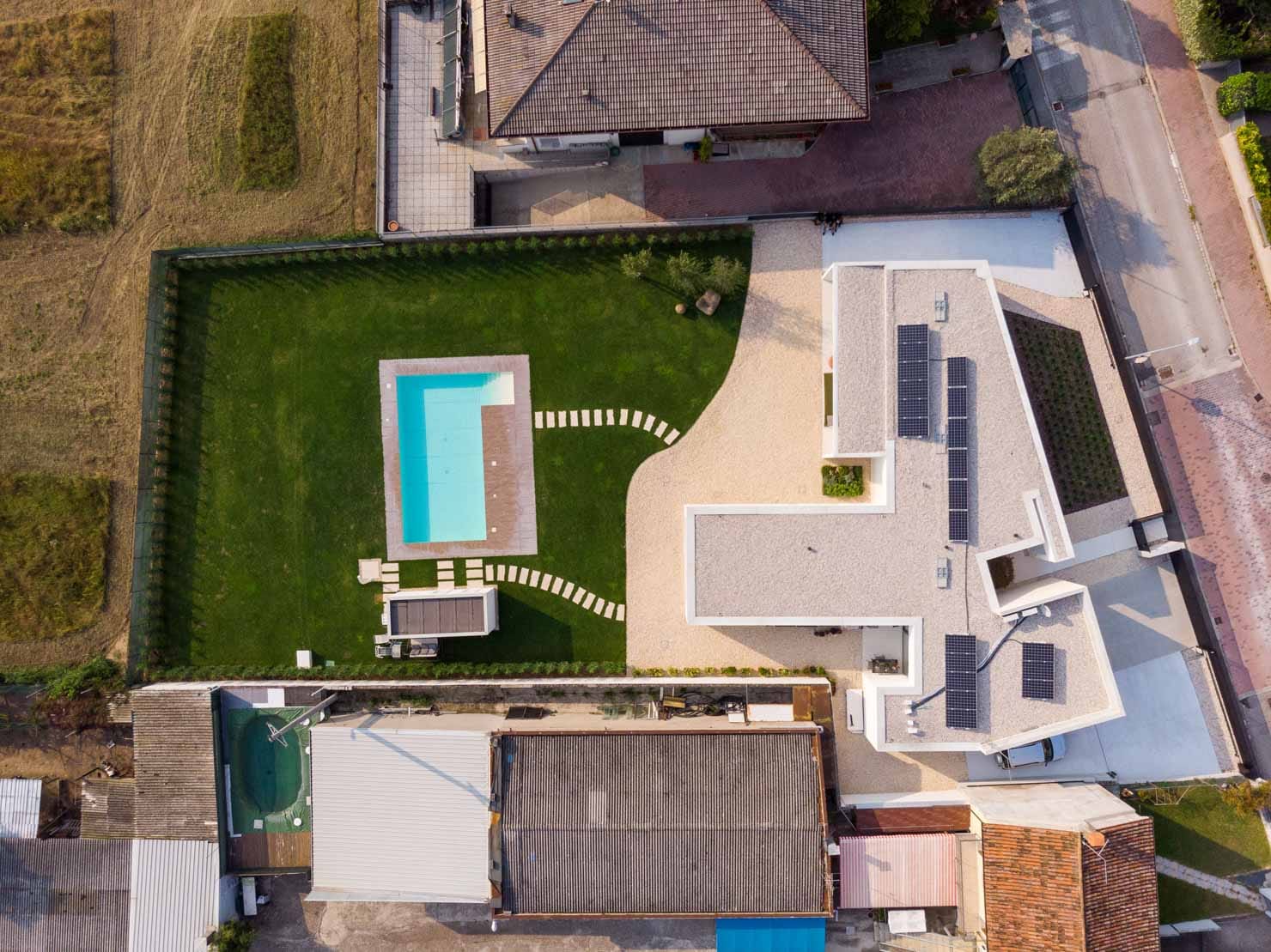
The indoor pool anchors the entire SPA complex. In our most ambitious projects, the pool is visible from the hammam, the relaxation lounge, and the garden — a continuous thread of water that unifies the experience. Technically, the indoor pool requires careful atmospheric control: humidity management, temperature regulation, and ventilation systems that maintain comfort without creating noise or draughts.
Between these active spaces, we design rest zones: loungers in natural stone niches, a quiet reading room, a meditation space. These transitional moments are as important as the active treatments — they complete the ritual and allow the body and mind to integrate the experience.
Technical Integration: HVAC, Humidity, Acoustic Control
The technical complexity of a private SPA is often underestimated. It requires specialist engineering from the earliest design stages.
Humidity control is the most critical technical challenge. Steam rooms and indoor pools generate enormous quantities of moisture that will destroy conventional construction materials within years if not managed correctly. We specify vapour barriers, specialist waterproofing systems, and HVAC designed specifically for high-humidity environments.
Acoustic control is equally important. A SPA must be silent — both from external noise intrusion and from the mechanical systems that operate it. We locate pump rooms and ventilation plant in acoustically isolated positions, and specify vibration damping throughout. The result is a space where the only sounds are water and the client’s own breathing.
Thermal comfort in a multi-environment SPA requires zoned heating systems that can maintain different temperatures in adjacent spaces. Underfloor heating is standard throughout — it creates warmth from below, appropriate for bare feet, and is invisible within the architecture.
Our SPA Projects: From Private Villas to High-End Hotels
Our SPA design experience spans private villas in the Veneto, wellness facilities in Dubai, and resort environments in East Africa. In each context, the design approach is calibrated to the client, the climate, and the cultural context.
In the Veneto, our private SPAs are integrated into the lower level of the villa — a protected, intimate world beneath the main living spaces. Natural light is brought in through carefully positioned light wells. Local stone connects the SPA to the regional material palette of the house.
In Dubai, the SPA responds to the extreme exterior climate. The indoor pool courtyard becomes a microclimate within the home — a cool, water-filled space that offers physical and psychological refuge from the desert heat. Materials are white and reflective, maximising the sense of lightness and calm.
Sustainable Wellness: Eco-Responsible SPA Architecture
The most beautiful SPAs are also among the most sustainable buildings. Natural materials, passive thermal mass, and intelligent water management reduce energy consumption while enhancing the sensory experience.
We specify heat recovery systems that capture warmth from pool water to pre-heat domestic hot water. Solar thermal collectors provide energy for pool heating. Rainwater harvesting replenishes pools and feeds landscape irrigation.
Sustainability in luxury SPA design is not a compromise — it is the highest expression of intelligence in design. A SPA that ages beautifully, consumes resources responsibly, and continues to perform perfectly for decades is the ultimate expression of luxury.
Commission Your Private SPA Design
If you are planning a private SPA within a new villa project or as a renovation of an existing property, we offer a private consultation to discuss your vision and requirements.
Every SPA we design begins with a conversation: about how you use it, what rituals matter to you, what materials make you feel at home. From this foundation, we create a design that is uniquely yours.
Contact us at info@federicocappellina.com or WhatsApp +39 333 101 6060.
Federico Cappellina Architects — Verona, Italy. Luxury villa and wellness architecture for discerning clients worldwide.